
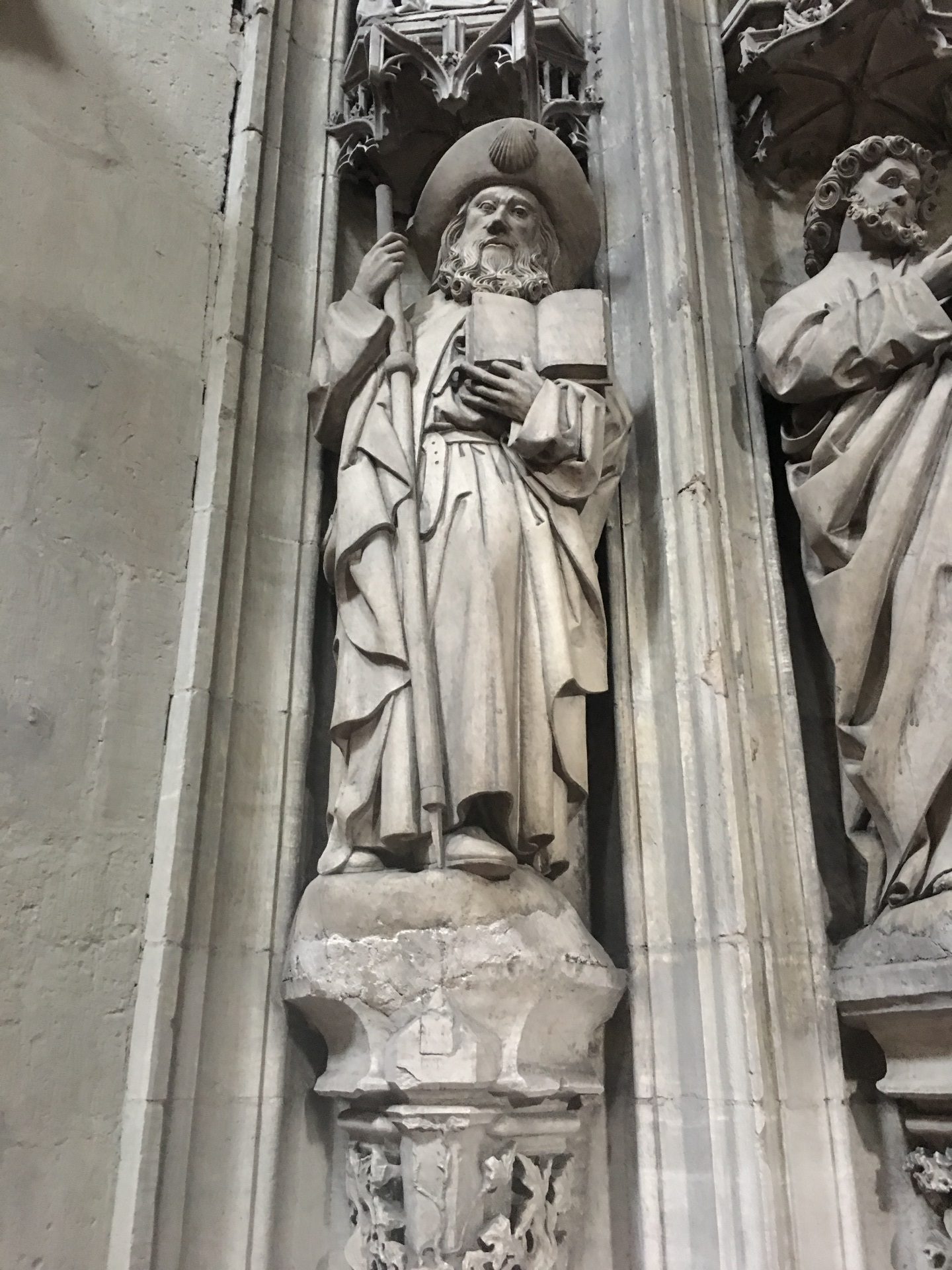
Laws were put in place to protect pilgrims, for both spiritual and practical reasons. The medieval world, though often politically divided, still had a sense of Christendom, a unity of shared faith. People could easily sympathize with and make room for the parallel spiritual aspirations of foreigners. And so there were times and places where people respected and protected pilgrims, offering them shelter, sometimes without seeking recompense, as happened in monastic hospices.
It also made sense that far more pilgrims would travel on routes where they felt safe. Merchants and towns had self-serving as well as religious motivations for creating safe passage for affluent pilgrims, who spent money on food, shelter and tourism. So pilgrims were also protected with hopes for a monetary return.
Bandits, and other criminals, though, are frequently mentioned. It wasn’t a safe world in general, and it wasn’t always safe on pilgrimage. Criminals were often sentenced to complete the pilgrimage and bring back the document, the Compostela, to prove they had completed their punishment. This put condemned criminals in the mix of piously motivated pilgrims, at times with unsurprising results.
Innkeepers were mentioned at length by the Codex Calixtinus because they were noted for cheating pilgrims, selling inexpensive candles for much more than they were worth, watering down their wine, getting them drunk and stealing from them, putting valuable articles in their luggage and then prosecuting them, and keeping the property of those who died in their care. Money changers, in cahoots with innkeepers, were known to defraud pilgrims, and the guards at the various shrines were accused of stealing pilgrim offerings left on altars
The author of the Codex also condemned toll takers at bridges and passes over the mountains. He held that tolls should have been lifted for pilgrims, but were still imposed in many places, at exorbitant levels.
Warfare and political enmity created many problems over the centuries. Religious military orders, such as the Templars, Hospitalers, and at least initially, the Knights of St. James, existed to provide safe travel for pilgrims, indicating just how difficult the conditions were.
The natural world, too, wasn’t always safe. Wild animals, including bears and wolves, and bad weather, floods and cold were also obstacles.
Pilgrims responded by traveling in groups, for there was safety in numbers, as well as the pleasure of each other’s company. Chaucer’s Canterbury Tales is a fictional account of one such companionship.
The trouble is actually with the English form of the name, which is not particularly close to the original biblical name. The closest English name would actually be “Jacob.”
Over time, the name has had a variety of forms in various languages:
This may be more than you ever wanted to know…but there it is.