 From the 12th Century southern regions of Italy: While excavating the necropolis of Sant’Angelo di Calarotto in Mottla, Taranto (high in the arch of the southern end of the boot of Italy), human remains were exhumed, containing a scallop shell, drilled in two places to hold a cord, used to hang the shell over the head of the deceased while living, and presumably, also after death. The section of the necropolis was dated to the 12th Century.
The presence of the scallop, so far from Spain – in fact 1,734 miles from Santiago – has something profound to say about this grave owner’s relationship to the Camino. The pilgrimage was apparently so sacred to the deceased’s identity that, among all of life’s possessions, the deceased chose to be buried with the scallop. It suggests that this individual saw both life and death defined, in profound ways, by the journey to Santiago and back.
1 Cor 2:6-9 – 6 Yet we do speak a wisdom to those who are mature, but not a wisdom of this age, nor of the rulers of this age who are passing away. 7 Rather, we speak God’s wisdom, mysterious, hidden, which God predetermined before the ages for our glory, 8 and which none of the rulers of this age knew; for, if they had known it, they would not have crucified the Lord of glory. 9 But as it is written: ‘What eye has not seen, and ear has not heard, and what has not entered the human heart, what God has prepared for those who love him,’ 10 this God has revealed to us through the Spirit.”
For reflection: Santiago is a great destination, and there is a deep triumph in making our way there, celebrating with friends, taking in the Pilgrim’s Mass, watching the botafumeiro swing if we’re lucky, and having a final round of tapas and Spanish wine or beer before heading home. But, in fact, Santiago is just a way station, as is the place of our birth, the places we grew up, the homes we created for ourselves as adults, and the place where we will die. All of them are just way stations.
All of life is a journey toward death and the ultimate pilgrimage and true destination is to the Lord, our God. All of the longing in life, all of the beauty, tasty goodness, cherished loves, dreams and hopes, find their fulfillment in God’s holy presence. Although we can find happiness and wholeness in this life, complete fullness only comes in the next. There is no sense in running from our mortality. In fact, far better to embrace, and even hope for the only arrival that is sufficient.
The Camino helps orient us toward heaven. We learn that we can be happy with physical suffering and without lots of possessions, or almost any possessions. We are challenged to reconsider our ordinary lives’ frenetic business. We are reoriented back to the key role that companionship and family make in our sense of purpose and contentment. We are reminded that empty spaces and natural beauty can bring us into a more palpable sense of God’s holy presence. Perhaps we have experienced the companionship of Jesus on his way.
The Camino has been, for many of us, among the most important spiritual moments of our adult lives, directly leading us into a deeper awareness of God’s presence and call for us, of Jesus’ love for us and willingness to accompany us, and even of his invitation for us to accompany him.
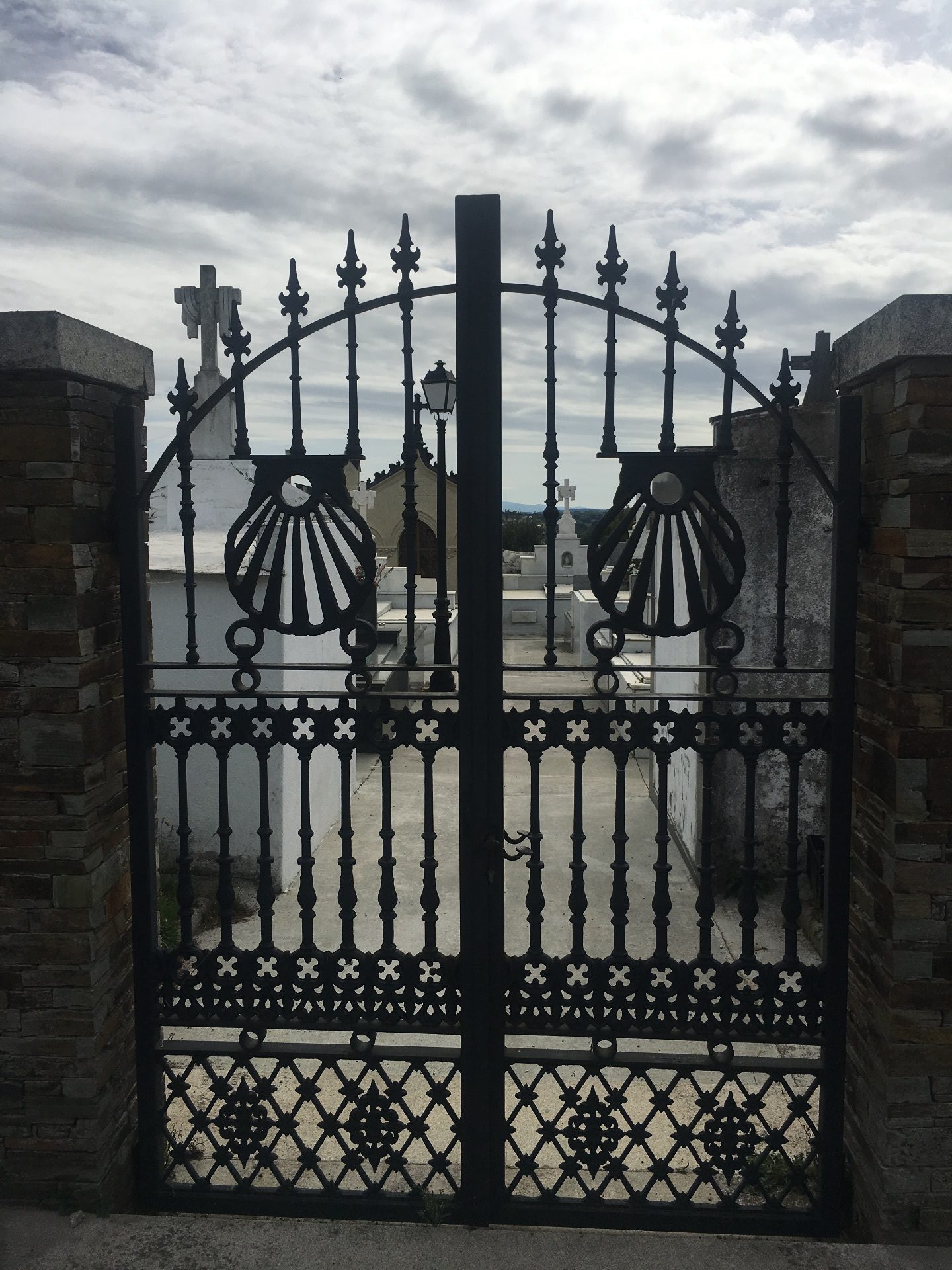
If your pilgrimage has impacted and re-oriented you in similar powerful ways, perhaps you just might consider if the scallop shell is a fitting symbol of that change. Perhaps you, too, might want to take it with you, as plain as it is, as the one possession you take to your tomb.