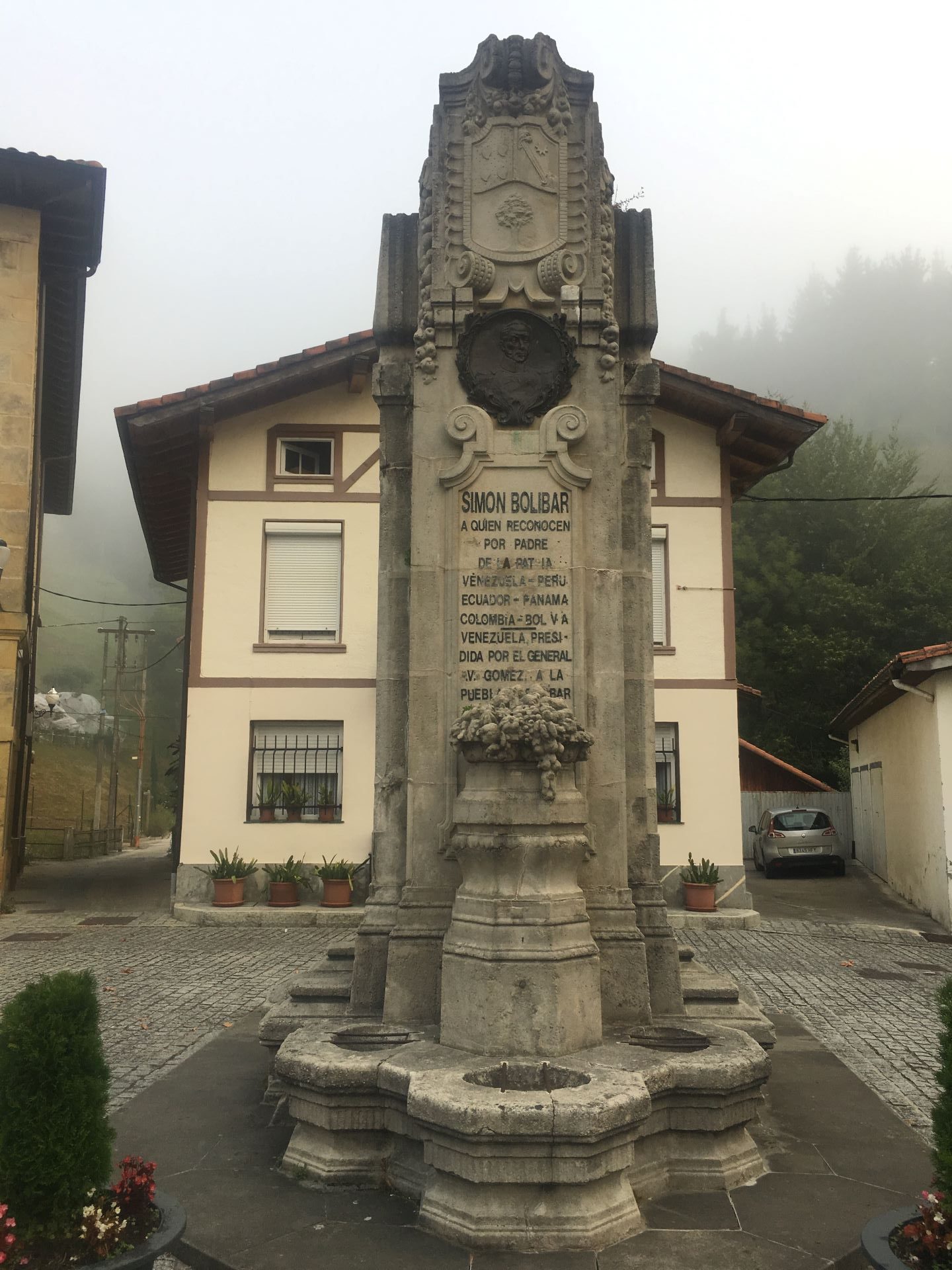
From the Camino: Rising early I made my way out of Markina-Xemein, through the home town of Simon Bolivar, sharing the same name, and climbed up into the wooded mountains of Euskal Herria, the Basque country, on my way to Gernika. I was early in my journey and the steep inclines were still a challenge, but the day was cool and misty, and though I tired quickly, my spirits were light.
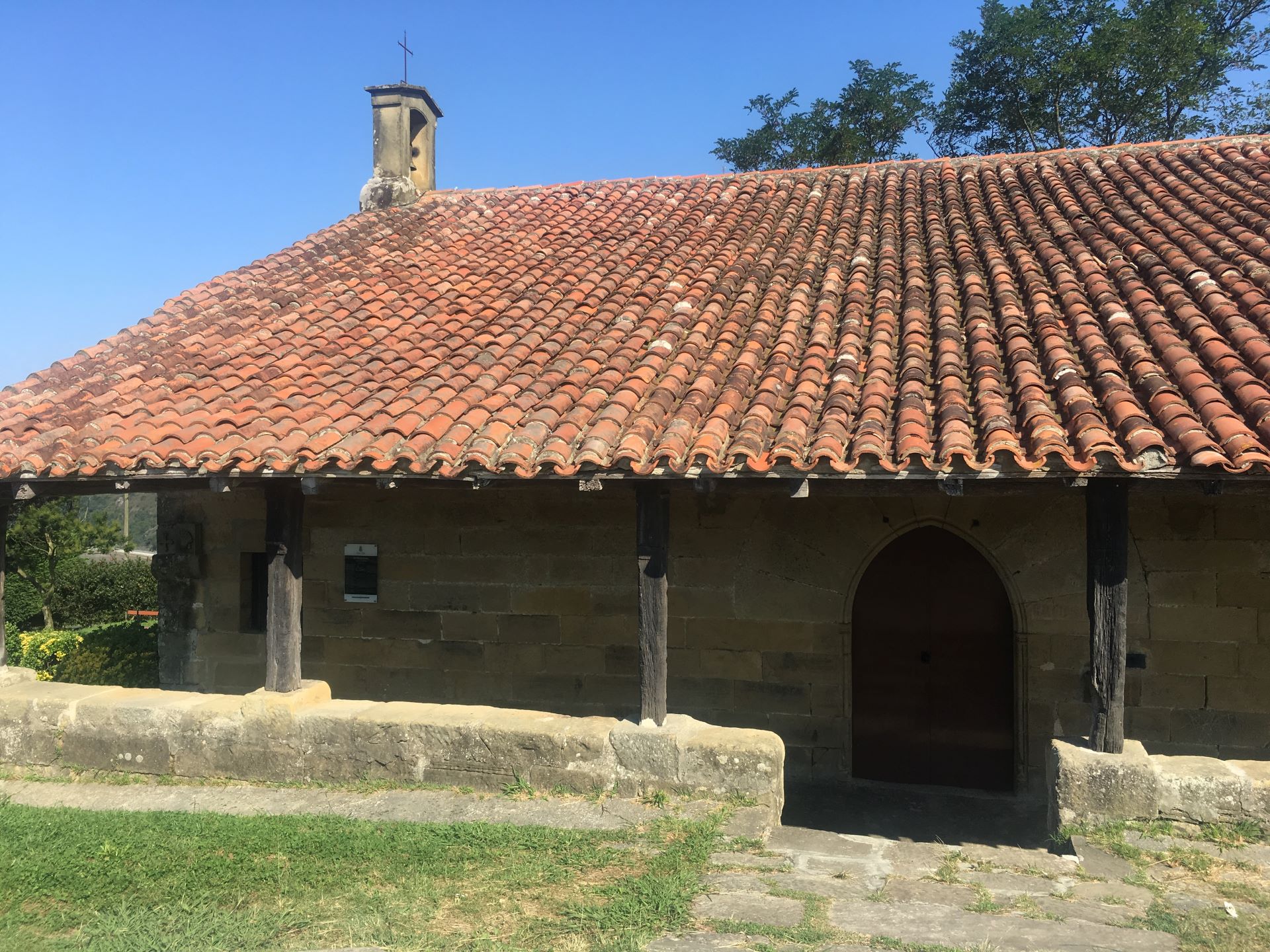
When I came upon the church of Santo Tomás, as was my custom, I found a place to sit outside in the small square – as usual the church was locked. I pulled out my parishioners’ prayer list, on the notes on my phone and had a quiet, restful and prayerful moment.
From there, as I carried on with my day’s journey, as I climbed, rising out of the mist I saw the Cistercian monastery of Zenarruza. The place has been set aside for God since the end of the ninth century. In 1379 it shifted from being a parish church to a collegiate church, with a community of canons, precisely so the community could take care of pilgrims making their way to Santiago. In later years a hospital was built to serve the pilgrim needs. The current church was constructed in the 15th Century. Since 1988, a community of Cistercian monks have made their home there, offering their prayers for the world, and hospitality to pilgrims on their way.
On entering the monastery chapel I heard the voice of a woman singing in French. Her voice was a simple voice, but it hovered beautifully between the stone walls. It was enchanting, but perhaps a little embarrassing for her, because she stopped singing. What could I do but sing myself, so I did, smiling at her, “Open my eyes, Lord, I want to see your face. Open my eyes Lord, I want to see!” I smiled at her, and gave her back the space to go on singing. I didn’t understand her French, and as we didn’t speak at all I have no idea if she understood my English. I presumed her song was a prayer of sorts, whatever the words. It felt prayerful.
Luke 3:21-22 – 21 After all the people had been baptized and Jesus also had been baptized and was praying, heaven was opened 22 and the holy Spirit descended upon him in bodily form like a dove. And a voice came from heaven, “You are my beloved Son; with you I am well pleased.
Luke 4:15-18 – 16 He came to Nazareth, where he had grown up, and went according to his custom into the synagogue on the sabbath day. He stood up to read 17 and was handed a scroll of the prophet Isaiah. He unrolled the scroll and found the passage where it was written: 18 “The Spirit of the Lord is upon me, because he has anointed me to bring glad tidings to the poor.
Luke 5:15-16 – 15 The report about him spread all the more, and great crowds assembled to listen to him and to be cured of their ailments, 16 but he would withdraw to deserted places to pray.
Luke 6:12 – 12 In those days he departed to the mountain to pray, and he spent the night in prayer to God.
Luke 9:18 – 18 Once when Jesus was praying in solitude, and the disciples were with him, he asked them, “Who do the crowds say that I am?”
Luke 9:28-29 – 28 About eight days after he said this, he took Peter, John, and James and went up the mountain to pray. 29 While he was praying his face changed in appearance and his clothing became dazzling white.
Luke 11:1-2 – 1 He was praying in a certain place, and when he had finished, one of his disciples said to him, “Lord, teach us to pray just as John taught his disciples.” 2 He said to them, “When you pray, say: Father, hallowed be your name, your kingdom come…
Luke 18:1 – 1 Then he told them a parable about the necessity for them to pray always without becoming weary.
Luke 22:39-42 – 39 Then going out he went, as was his custom, to the Mount of Olives, and the disciples followed him. 40 When he arrived at the place he said to them, “Pray that you may not undergo the test.” 41 After withdrawing about a stone’s throw from them and kneeling, he prayed, 42 saying, “Father, if you are willing, take this cup away from me; still, not my will but yours be done.”
For reflection: In Luke’s Gospel, we are given a special window into the prayer life of Jesus, allowing us to draw some important conclusions about how important it was in his life and teaching.
In the first place, it’s noteworthy just how often Jesus steps aside from his active ministry to pray. He breaks off from his ministry in the other Gospels, too, but they don’t record it as often as does Luke. We can ask why he dedicated so much time to pray. Even where it appears to interrupt his important ministry, he still deemed it a necessity. If it was required for him, how could it not be for us?
We observe that Jesus prayed on the banks of the Jordan, in deserted places, on mountains, in solitude, in uncertain places, and on the Mount of Olives. He was accustomed to attend the synagogue on the Sabbath, but certainly didn’t limit his moments of prayer to the appointed places or times for prayer. If there was a place that spoke to him, or a need before an important decision, such as choosing the Twelve Apostles, he stopped to pray.
So be quick to pray, even if it is only to call to consciousness the holy Presence. Pray outside locked churches, and inside open ones. Pray on mountain tops, and in the green woods you pass through. Pray by the side of rivers, and as you pass by the wayside crosses. Pray at every shrine and chapel. As Jesus instructed us in Luke 18:1, “pray always.”
Why? We pray because God desires it; because we want to be in relationship with God; because we have to (it’s innate, growing out of our human longing for the divine); because it helps us; because we are in need; because it helps us unburden our sadness, anger, stress or frustration; because it helps us praise God; because it brings us into solidarity with others, family, friends and larger community; and especially on pilgrimage, we pray because it enables transformation.[1]
For the sake of making the very most of our Camino experience, it might be good to ask whether it is best to consider whether we are interrupting our walking with prayer, or perhaps better, if we aren’t focusing our prayer by walking?