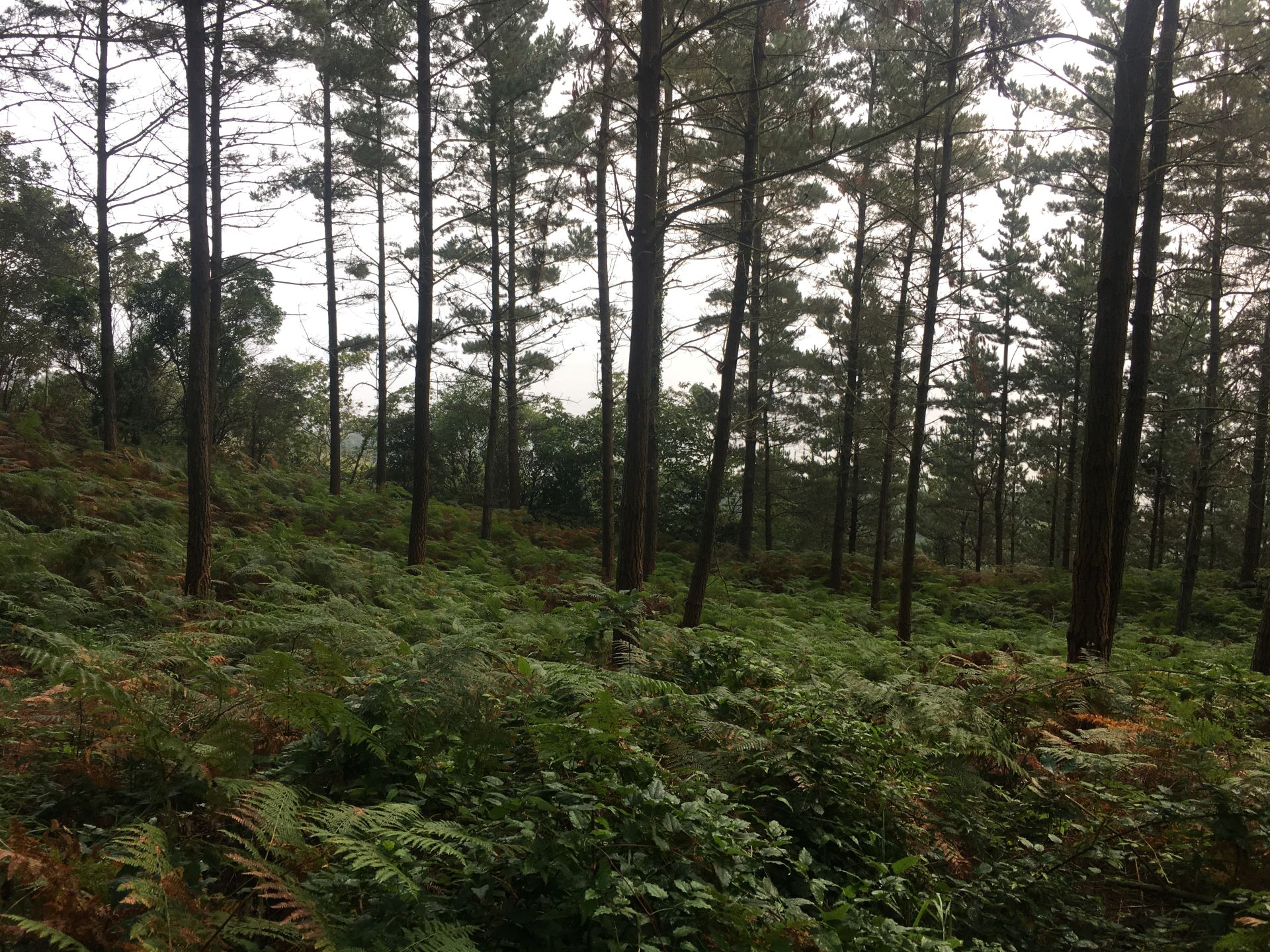
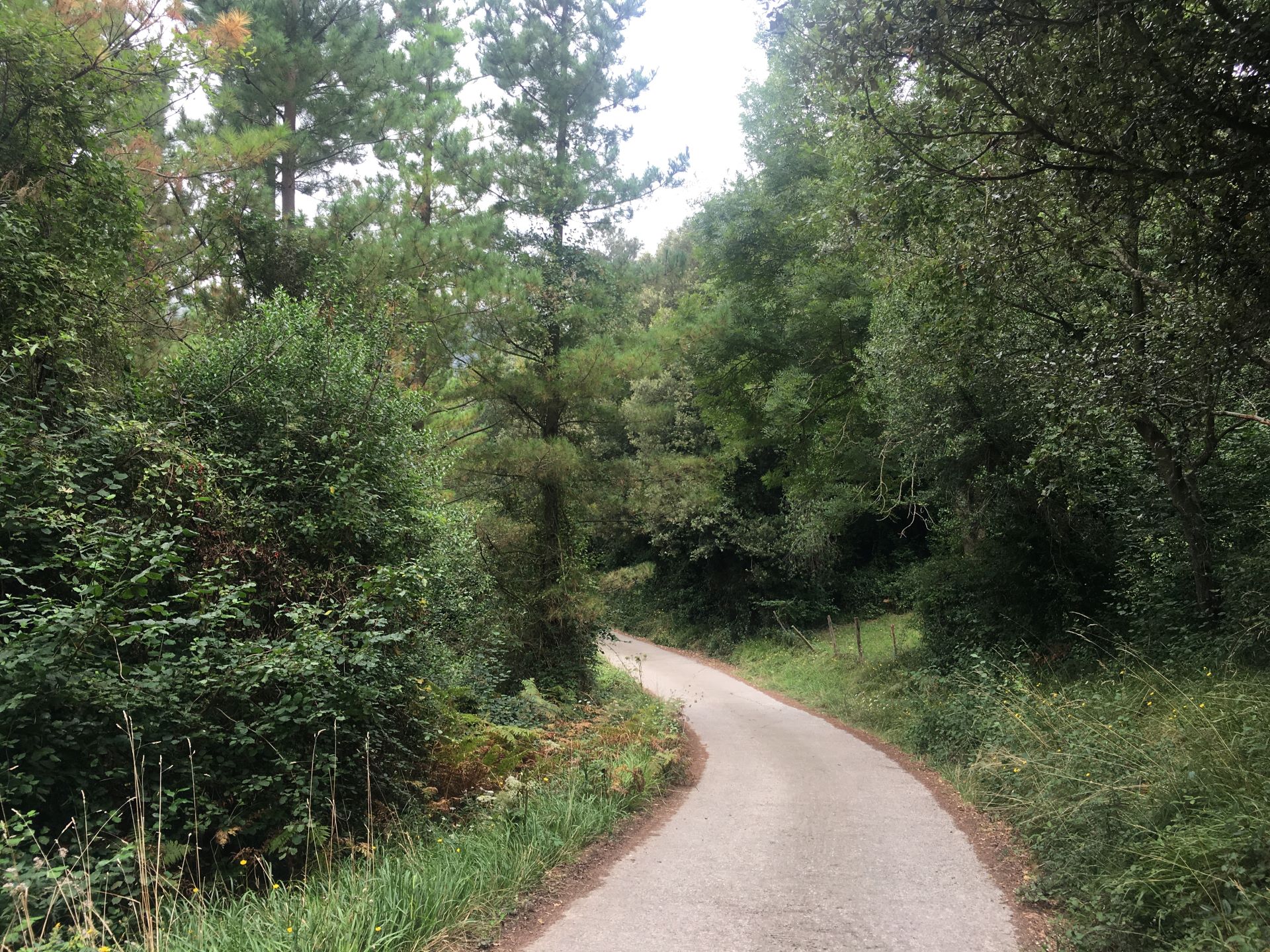
 From the Camino: While making my way through the beautiful Basque countryside, I shared the Camino with two wiry, fast-moving Austrians, a husband and wife team. On the two days we overlapped, we leapfrogged each other, as they made more stops than I did for coffee or a bite to eat, but they walked much faster than I and quickly passed me again. As happens, we took to ever more friendly greetings as we recognized each other, and eventually, they slowed down enough to pass the last hour or so talking with me as we made our way into the Basque town of Gernika. We settled into our night’s shelter, they went to put their clothes in the laundry, and we met to share a lovely late lunch. For the life of me I can’t remember their names, but he was a winemaker, and she was a school teacher. I regret not making a better effort to keep their contact information and to keep in touch with them.
Two years prior they had walked the two weeks from Porto, through Tui, to Santiago. As so often happens, the experience was too rich for a one-off. In fact, it called to them so strongly, they committed to returning to it in a more enthusiastic fashion. Two years later, he stepped out the front door of his home on the outskirts of Vienna, and carrying his pack, he started walking. This was just as it would have been done by medieval Europeans. The starting place was not an airport, it was the front door. She couldn’t start with him because she needed to wait for the school term to finish before she joined him in Switzerland. They timed it so they could make it together to Santiago in time for her to get back to her school in Vienna before the fall semester started He had walked so far that I believe he was on his third set of hiking boots, while she was on her second.
After all those miles, they were amazingly fit, and could walk incredible distances very quickly. There was not a chance in the world that I could keep up with them, but I shared a delightful meal with them one evening and got to learn of their absolutely amazing journey. You can do these things in Europe.
Psalm 122 – 1I rejoiced when they said to me, “Let us go to the house of the Lord.”
2 And now our feet are standing within your gates, Jerusalem.
3 Jerusalem, built as a city, walled round about.
4 There the tribes go up, the tribes of the Lord,
As it was decreed for Israel, to give thanks to the name of the Lord.
5 There are the thrones of justice, the thrones of the house of David.
6 For the peace of Jerusalem pray: “May those who love you prosper!
7 May peace be within your ramparts, prosperity within your towers.”
8 For the sake of my brothers and friends I say, “Peace be with you.”
9 For the sake of the house of the Lord, our God, I pray for your good.
For reflection: As addressed earlier, medieval pilgrimages started at home, and didn’t end until the pilgrim had made an equally arduous journey all the way home.
We have the freedom to begin at the time and manner of our choosing.
In truth, your pilgrimage begins when and where your decide it does. I encourage you to push that as early into your preparations as you can. Your preparation, doing walks at home, reading Camino blogs, choosing your gear, discussing routes with companions, packing, etc. is as much a part of the process of reshaping your life as the first step in Spain. Do them all prayerfully, intentionally. Invite God into the moment.
Again, at the far end of your Camino, the pilgrimage ends when you decide it does. It can end, certainly, when you arrive at Santiago. It might well include the journey home, and the re-engagement with family and friends. It might also end, though, only when you’ve put into place the commitments you’ve made to yourself and God, living them out in daily life at home, engaging with God, family and friends in new, healthier ways. Then, again, you might just decide that life is a pilgrimage, and while one major segment, the Camino, is completed, the pilgrimage of life continues.