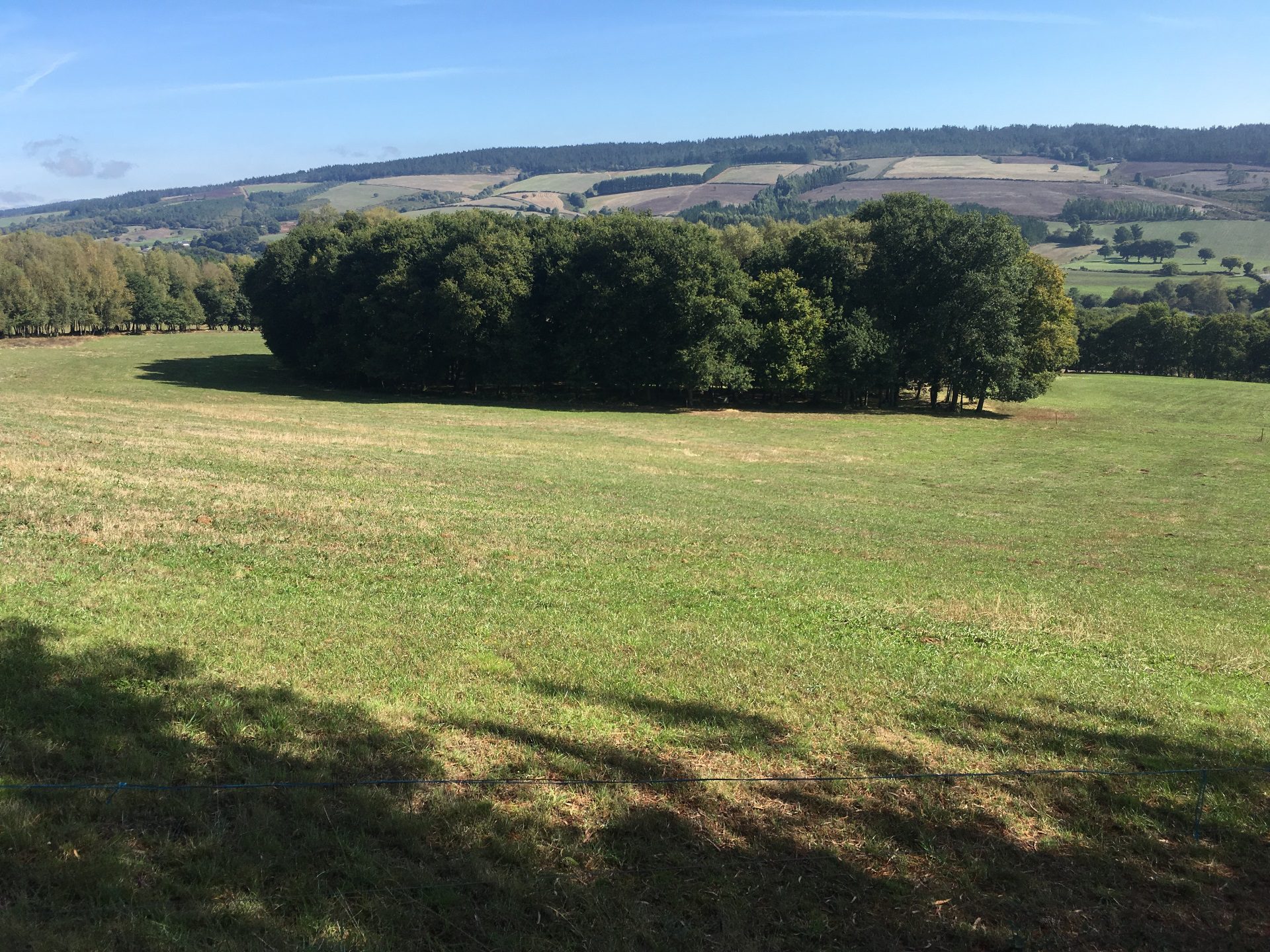
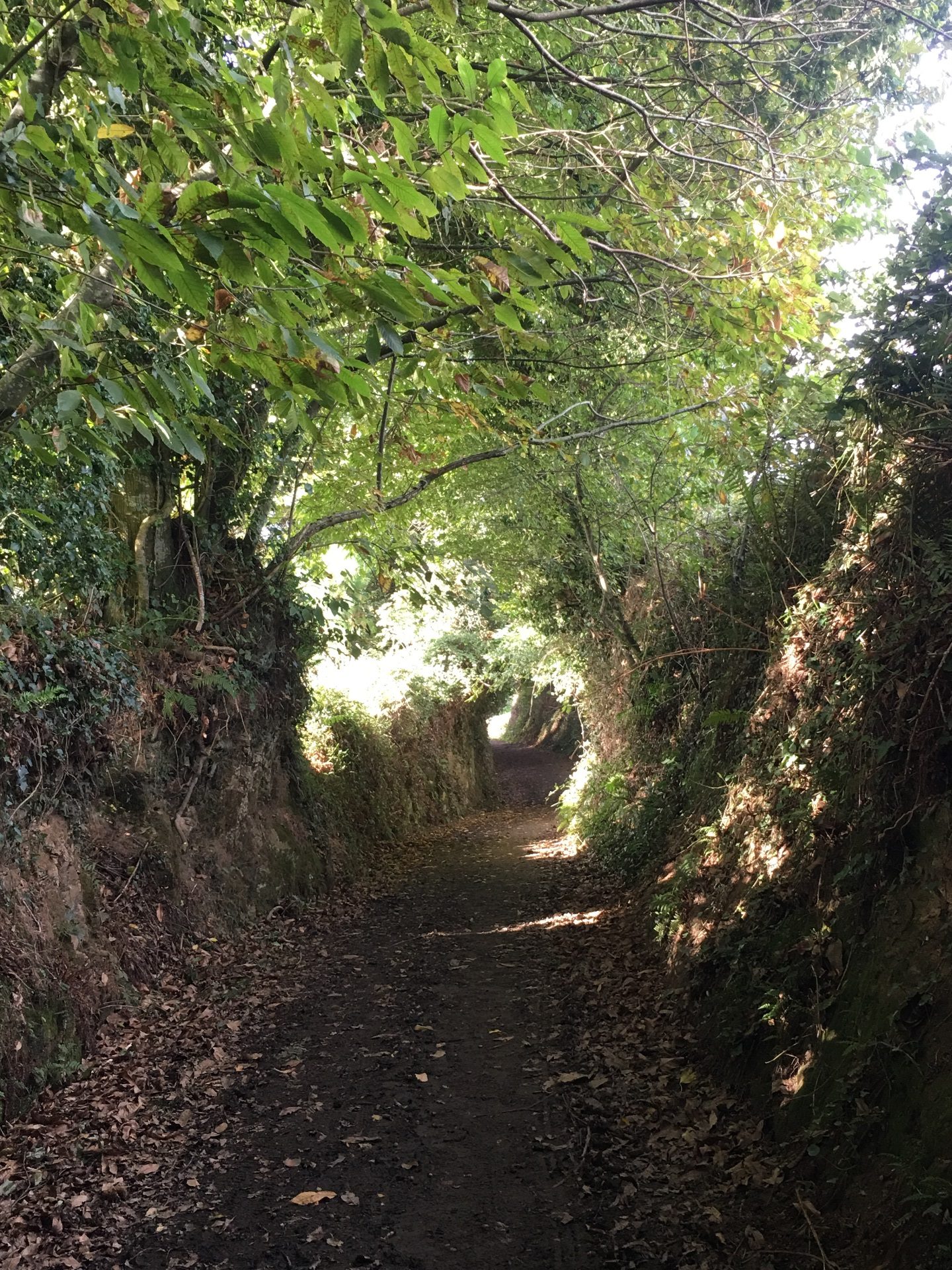
 From the Camino: While I walked, in the wide open spaces of silence, I began to revisit, in my inner dialogue with myself, the most troublesome moments of my life: my actions that shamed me, encounters that went awry, family relationships that weren’t anything like what I hoped they’d be, friendships that had faded so much that it hurt. I’m not sure that everyone is chased by their own set of demons. I’ve met people who are blissfully free of their pasts. Perhaps they’ve already done their work? But the Camino made it clear to me that I had work to do.
The journey always provided distractions from this necessary inner work: Where might I get my first cafecito? How much hotter can it get? Is that my destination I see in the distance? Will that amazing cocido montañes be on the menu del día? Yes, I always have a preoccupation with my favorite meal of the day, that is, the next one.
Regardless, my past life would eventually make its way to the surface. I couldn’t run from it. It followed me. However fast I walked, feelings and thoughts would arise, and I’d have to restart the hard work again.
My temptation was to have inner dialogues with the key people in my life…but that was a dead end. I was speaking for both sides at that point, which was profitless – they couldn’t hear what I was saying, nor were they responsible for the words my imagination drummed up for them. What I needed was to resolve my own choices: forgive others and let go? withdraw from unhealthy relationships? forgive myself for past failures? resolve to create new habits? Whatever the past required, I had to resolve to respond in a way that was graced.
Even when I made some firm decisions, I found that I had to repeat some of these processes and reaffirm my resolutions before they actually settled comfortably into my consciousness.
Gen 32:23-31 – 24 That night, however, Jacob arose, took his two wives, with the two maidservants and his eleven children, and crossed the ford of the Jabbok. 24 After he got them and brought them across the wadi and brought over what belonged to him, 25 Jacob was left there alone. Then a man wrestled with him until the break of dawn. 26 When the man saw that he could not prevail over him, he struck Jacob’s hip at its socket, so that Jacob’s socket was dislocated as he wrestled with him. 27 The man then said, “Let me go, for it is daybreak.” But Jacob said, “I will not let you go until you bless me.” 28 “What is your name?” the man asked. He answered, “Jacob.” 29 Then the man said, “You shall no longer be named Jacob, but Israel, because you have contended with divine and human beings and have prevailed.” 30 Jacob then asked him, “Please tell me your name.” He answered, “Why do you ask for my name?” With that, he blessed him. 31 Jacob named the place Peniel, “because I have seen God face to face,” he said, “yet my life has been spared.”
For reflection: Jacob had a lot of demons to work through. He had been treated very poorly by Laban, his kinsman and eventual father-in-law, and was rightfully resentful for how he had been duped and cheated. In turn, though, he was forced to consider how as a young man he had cheated his brother, Esau, of the blessing his father Isaac had intended for Esau. In this passage, Jacob was expecting to meet Esau on the very next day, and clearly feared the very worst. And so he has a battle with a man who turns out to be much more than a human — Hosea 12:5 refers to him as an angel. And the struggle was hard and lengthy, lasting the night.
The brawl was clearly a metaphor for Jacob’s inner turmoil. And in it he resolved, apparently, to meet Esau humbly, bowing repeatedly (Gen 33:1-4) and was so changed by the experience and what he discovered about himself, that a different name is required for the new person he had become, hence “Israel,” or “one who has struggled with God.”
We, too, can draw God into our inner struggles, and shape our decisions according to the teachings we know to be true, about love and forgiveness, about the requirements for integrity in discipleship. Perhaps we have been hurt unfairly…can we forgive? Perhaps we have wounded others…can we humbly ask for pardon? Perhaps we have shamed ourselves…can we grant ourselves absolution? Perhaps evidence suggests we acknowledge the death of our dreams, some relationships, our life plans…can we chart a new course? Perhaps the key gain will be to accept others as they are, not as we want them to be. It won’t necessarily be an easy process. The biblical metaphor places the struggle at night, when it is dark…and the process might, indeed, be dark for us, even bruising, as it was for Jacob’s hip.
But the struggle isn’t forever. Dawn comes. We can make conscientious decisions. We can resolve our inner struggles. We can change, and grow, and become new people ourselves. We might not change our names, but we might take on new adjectives: free, unburdened, unshackled, repentant, hopeful or renewed, whatever the issue engenders in us.
Take your time – however long your dark night of the soul lasts – and keep God intimately in the midst of your struggles, even if it means fighting with God. God has broad shoulders and will endure, still loving you, and open to celebrate your renewal.