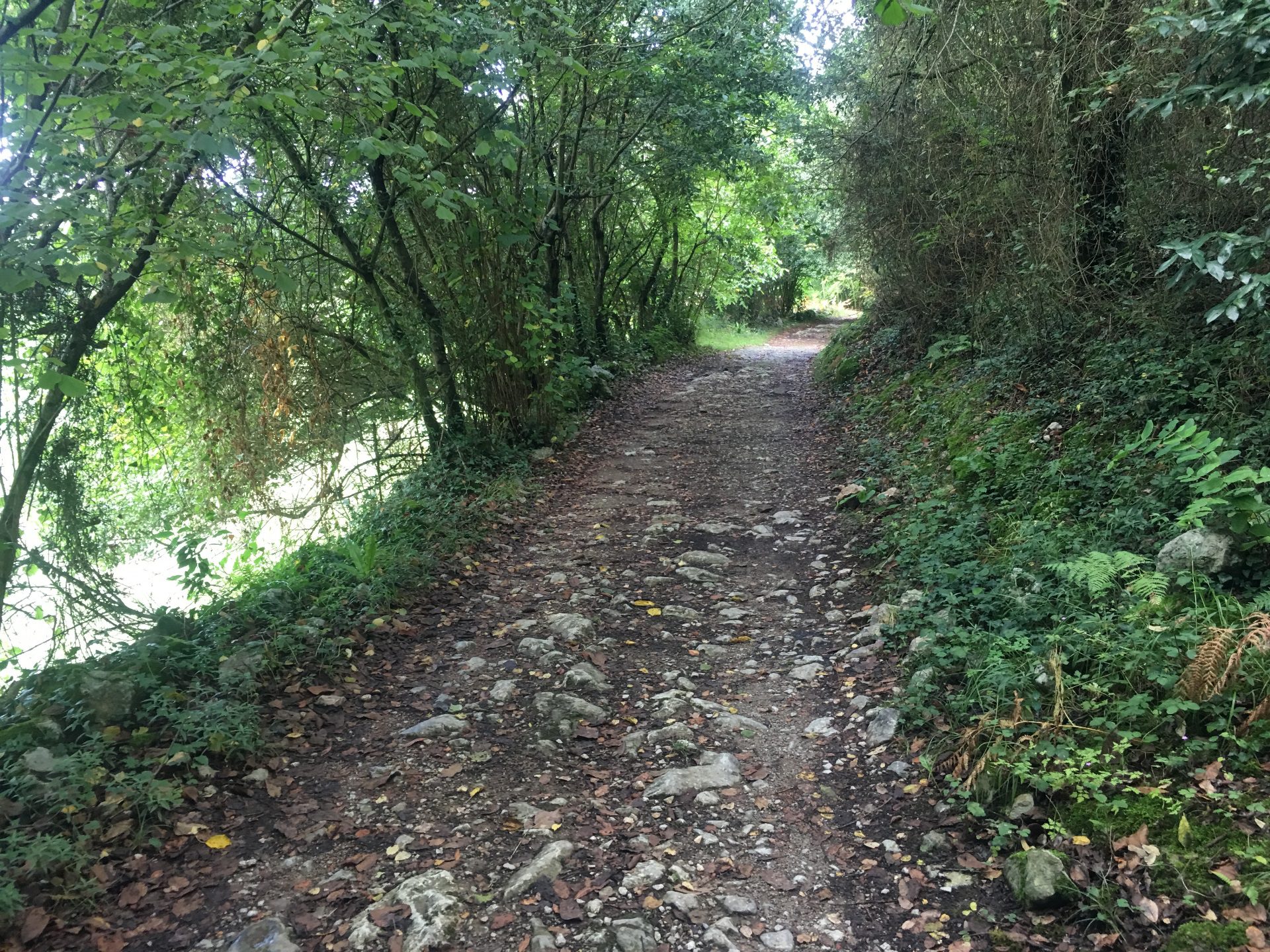
From the Camino: There are a number of fanciful stories that populate the religious consciousness of the Camino. Among the most fantastical, and yet delighting, explains the presence of the chickens in the Romanesque Cathedral of Santo Domingo de la Calzada perhaps the only such gallinaceous presence in any cathedral anywhere.
The story is told of a German pilgrim, Hugonell, making his way to Santiago with his parents, who stopped for the night in the town. The local tavern keepers daughter became enamored of him. Her emotions changed quickly to rage, though, when she found that her affection was not shared. Having planted a silver cup in his baggage, she later charged him with having stolen it. It was a hard time, when thieves were typically put to death.
Poor Hugonell was duly hung, for no less than a week, leaving his grief stricken parents to continue their pilgrimage, to pray for his soul at the shrine of the apostle in Santiago. Returning, they intended to visit his grave, but found him still suspended from the gibbet and still alive! While hanging there, he gave credit to Santo Domingo for bringing him back to life. He beseeched his parents to petition the local mayor to cut him down, promising a miracle from St. Domingo. The mayor, in the mean time, was enjoying a dinner of two chickens. When told that the boy wanted down from the gibbet, responded that the boy could no more be alive than the two roast chickens before him. The two cooked birds, to everyone’s amazement, were immediately restored, skin, feathers, beaks and all, and began to crow.
Hugonell was restored to his family, and happily left that benighted place. Ever since, with the apparent approval of Pope Clemente VI (1350), a chicken and a rooster have been kept in the Cathedral in memory of the miracle. They have a saying:
“Santo Domingo de la Calzada,
donde canto la gallina después de asada (“where the roosters sings after being grilled”).
Finding a feather is said to bless the bearer with success in pilgrimage, while whoever hears the rooster crow receives the blessing of Santo Domingo, the founder of the town and the patron of the Cathedral.
Luke 11:4 – “…and forgive us our sins, for we ourselves forgive everyone in debt to us…”
For reflection: Poor Hugonell certainly deserved better than what he received from the innkeeper’s daughter, and while clearly fanciful, the story grants a certain satisfaction for the victimized. It speaks of the human longing for justice for the oppressed, for restoration of the lost, and for hope when all seems desperate. We want justice, and sometimes sink into deep emotions when it does not come to us. While faith may instruct us that God’s justice will prevail in eternity, that can sometimes feel like small comfort when we have been deeply wronged. We might even hope for God to be vengeful with our enemies.
God, who sees to the heart, and knows and understands every one of our limitations, who is aware of our inner brokenness, and the subconscious roots of our behaviors, is inclined to look with mercy, not only on us, but on those who deeply offend and hurt us.
There can be no happiness while carrying the weight of anger and resentment in our hearts. While on pilgrimage, perhaps we might learn to let go of our grievances, be they ever so just, and find contentment, not in justice, but simply in the letting go of the resentment?
On the Camino, it’s not enough that we learn how few material things we need to find happiness. While shedding our life of the many possessions that encumber our day-to-day lives, we might, in the deep examination of the pains and hurts of life, achieve freedom by simply letting go of the debts we think others owe us.
So…who owes you? What will, in the end, finally satisfy you? Can you leave it to God? Can you just let it go? Can you, as St. Paul says, “conquer evil with good”?