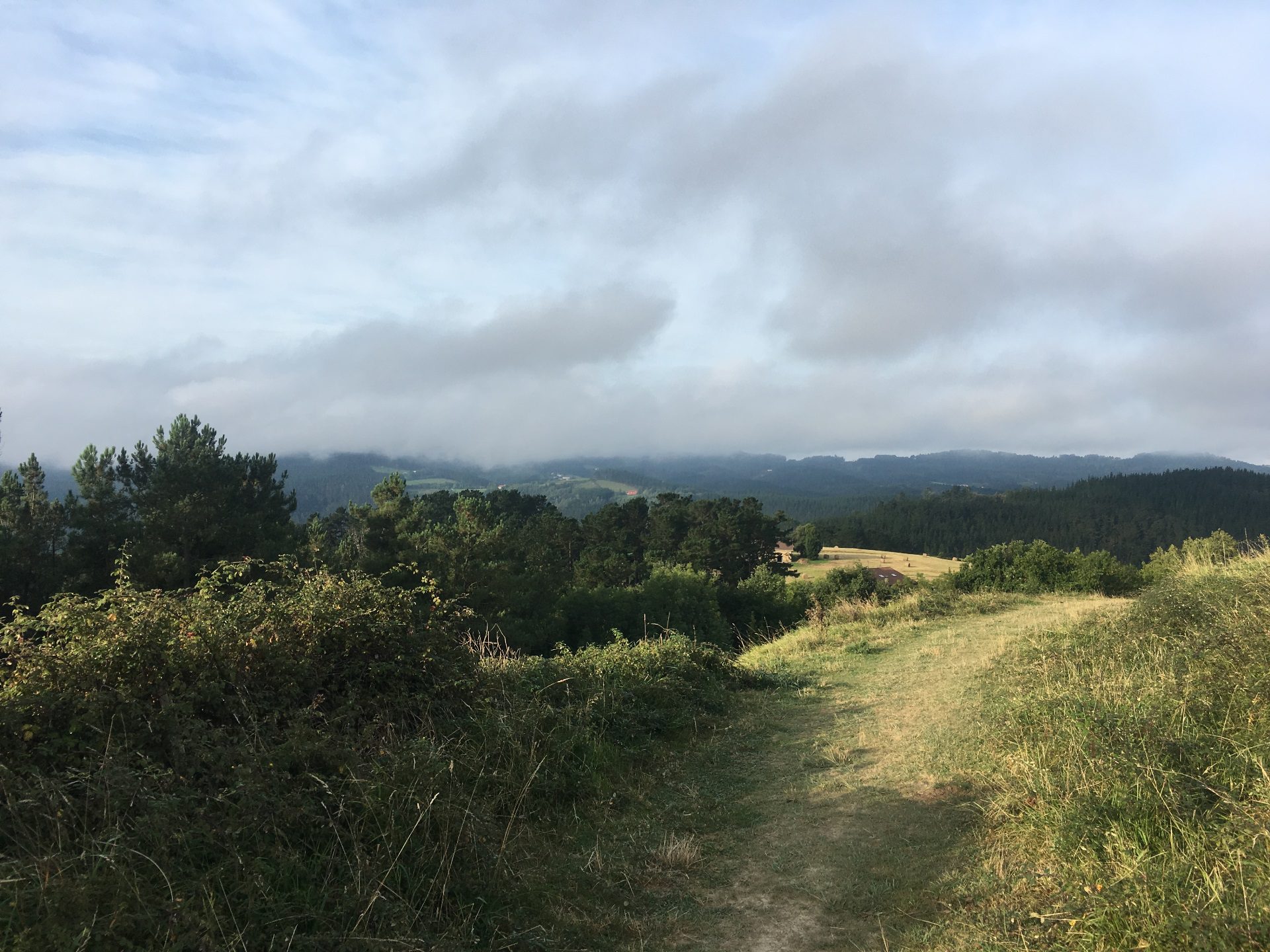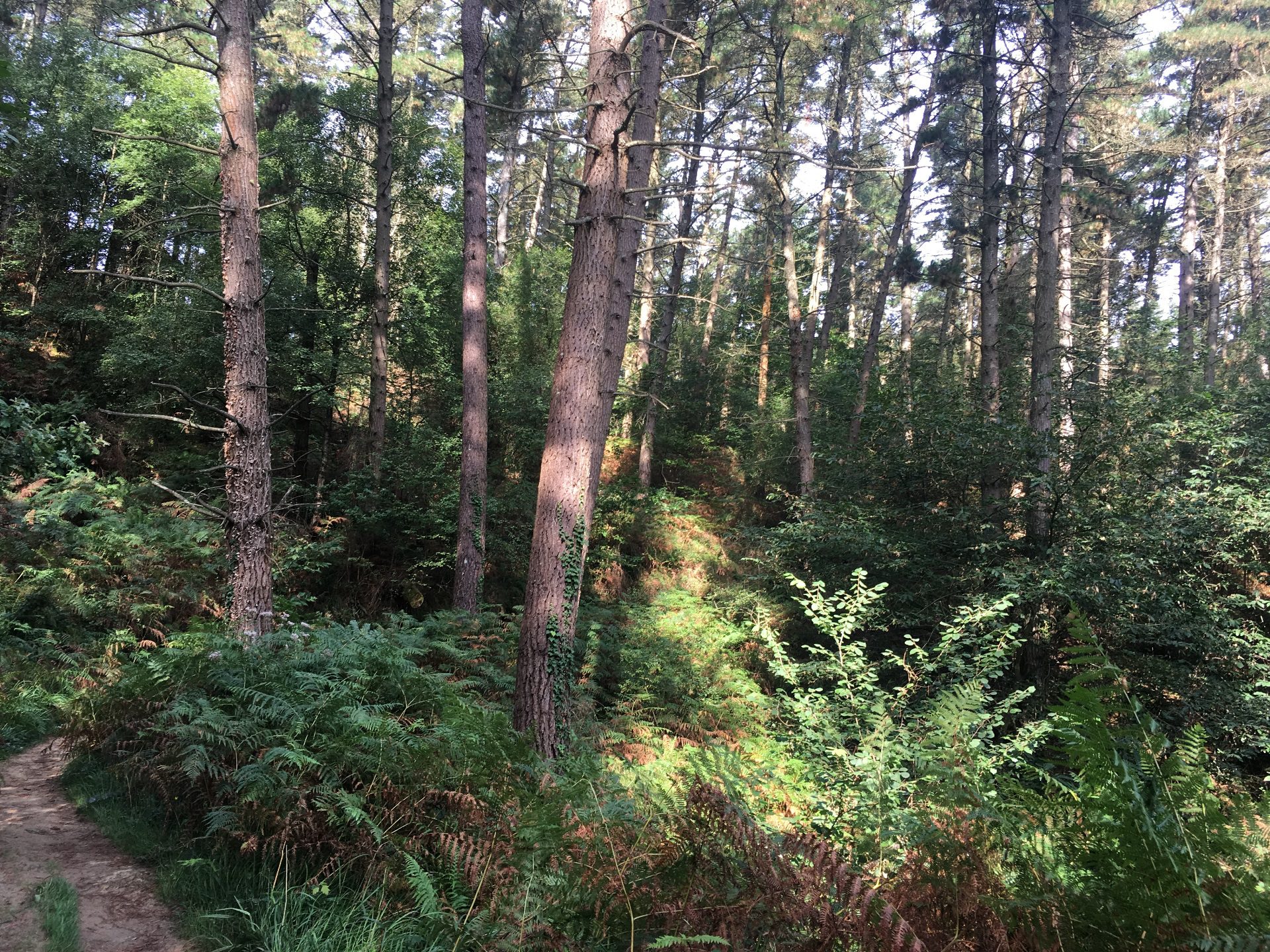
From the Camino: One day, while on the Portuguese Camino, my friend, Fr. Jim and I were, as usual, deeply engaged in some conversation. Everything was fair game, while talking with him – family, the church, the seminary, my parish, our shared friends, childhood. I loved the time with him. As would happen, while distracted by our thoughts and chatting, we were somewhat unconscious of the world passing around us, perhaps less than we should have been…and we went the wrong way.
I did notice, but only in passing, a young man with a really dour expression, bent over doing some gardening in a yard raised up by a retaining wall, up above the street level. It was a hot day, and he looked like he wished to be anywhere on earth but where he was, weeding a front yard in the heat. While it caught just a moment of my attention, I didn’t dwell on it, walking on.
At the same time, we didn’t notice the yellow Camino arrow, calling us to veer to the left, so we continued straight on. We had only gone a couple of house lengths, though, before we heard someone calling out loudly behind us. Looking back, we saw that young man, standing up now and waving to us. He had that same dour look on his face as before. When he had our attention, he said something indeterminate in Portuguese, which neither of us spoke, but his intent was clear. He pointed off in the correct direction of the Camino. We called back, “Obrigado!” or “thank you,” the full extent of our Portuguese. We retraced our steps and headed off in the right direction.
The young man’s willingness to help us out, unasked, was only a small thing, but I remember, year later, still appreciating his hard-faced kindness. When you’re walking sixteen or seventeen miles, the last thing you want is to add yet more miles, even just one or two, in the wrong direction and back.
Acts 28:1-2 – 1 Once we had reached safety we learned that the island was called Malta. 2 The natives showed us extraordinary hospitality; they lit a fire and welcomed all of us because it had begun to rain and was cold.
For reflection: Appearances can be deceiving. Don’t be put off by the serious, perhaps even dour, facial expressions of some Europeans. A serious demeanor is not intended, and usually not received by other Europeans, as anything but professional. Smiles are often saved for family and friends. In fact, Europeans are sometimes puzzled by the easy way Americans smile, wondering if it’s artificial. When we venture into their world, we get to operate by their terms, which sometimes do not include the friendly face we would have expected from a service person at home.
People are so much deeper than their appearances. When we get past the exterior, we often discover a depth of goodness and beauty in each other that surprises and lifts us up. We can miss it we’re not looking for it, or not appreciating it when it happens. Even dour young men, unhappy in the hot sun, can be a wellspring of goodness. If we started with the presumption that we are not owed anything, that we are not special, that every other person is equal to us in dignity, everything becomes grace.